
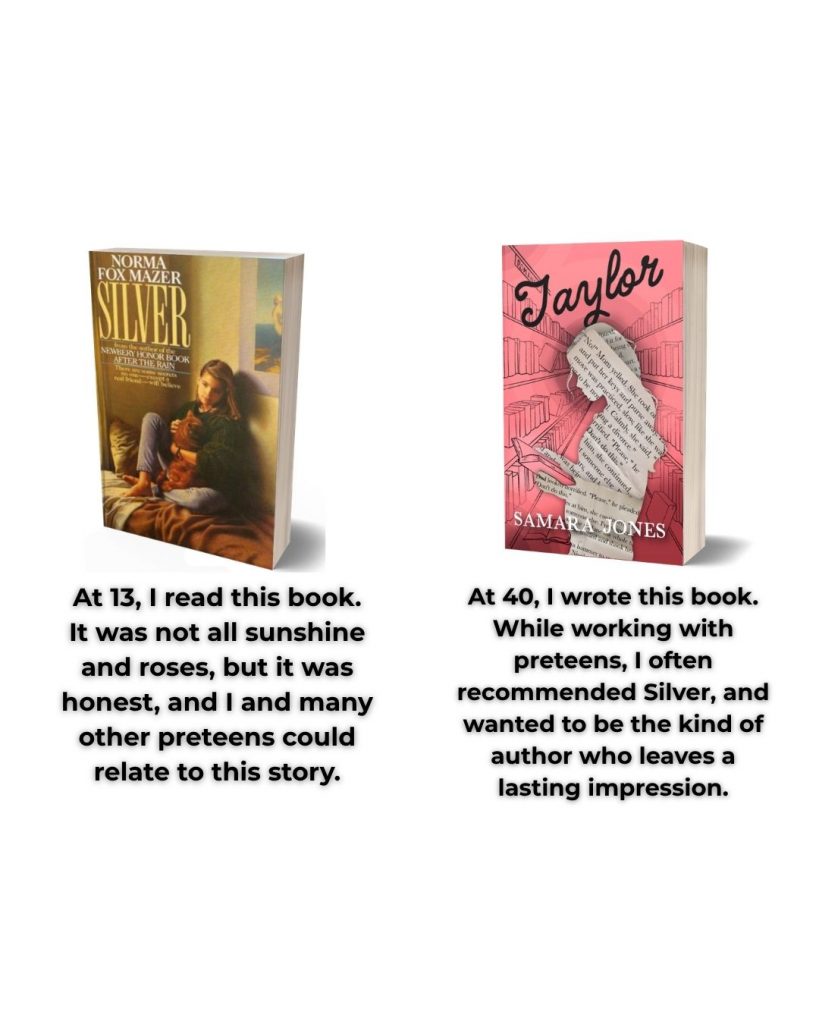
 One afternoon, while browsing the library at Killough Middle School in Houston, Texas, a book stopped me in my tracks. Silver by Norma Fox Mazer. Something about the sadness on that girl’s face on the cover, and the way the description was worded, made me feel like I absolutely had to read it. I did, and it changed me.
That book planted a seed. I wanted to be that kind of author for preteens and early teens, the one who wrote the story that stops a kid cold in the middle of a library aisle. So I wrote Taylor.
But here is where the road gets complicated, and if you are an indie author, you may already know this feeling.
As an adult, I am not allowed to directly market to children. That means Taylor, a story written with that same-aged reader in mind, has to be marketed to twenty-somethings and parents instead. It is a strange and frustrating position to be in. You write for one reader, and the rules of the industry force you to speak to another.
On top of that, mainstream YA these days tends to center adults, single mothers, or married couples. Taylor is about a girl who is not yet thirteen, and that alone makes her an outlier. Add to that the current publishing climate, where every story seems to be expected to be warm and uplifting from page one. Readers and gatekeepers alike seem to shy away from characters who struggle, even when that character earns a happy ending by the last page. That leaves both me and Taylor without a clear shelf to stand on, without an obvious readership to call home.
If you are an indie author who has ever felt like your book does not fit neatly into any category, you are not alone. Some of the most important stories are the ones that fall between the cracks. The challenge is not the writing. It is finding the readers who have been waiting for exactly what you wrote, even if they do not know it yet.